Compact home elevator in Egypt
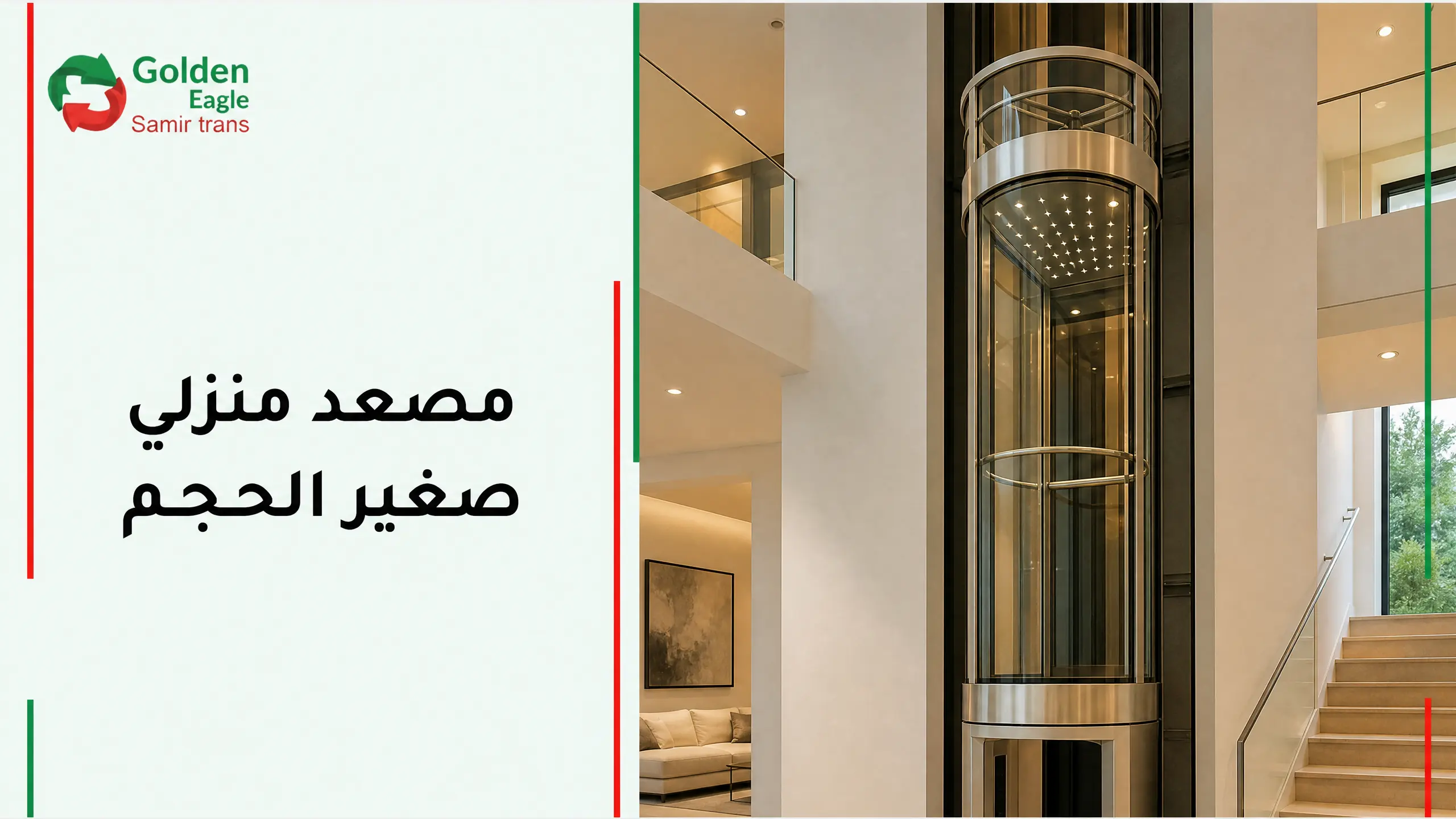
Primary keyword: Small home elevatorA home elevator is no longer a luxury reserved for large villas. With the growing number of multi-story homes and the increasing need for easier mobility for seniors and people with disabilities, a small home elevator has become a practical solution that can be installed even in limited spaces. Modern solutions offer compact designs, quiet operation, reasonable energy consumption, and the flexibility to be installed either inside or outside the home, depending on the building’s layout.
However, choosing the right elevator depends on more than its size. There is a significant difference between an elevator designed for one or two people and one intended to carry a wheelchair or several passengers across three floors. The total cost also varies according to the operating system, site preparation, load capacity, finishing, warranty, and maintenance services. This guide explains the key points you should understand before purchasing an elevator or requesting a technical inspection.
Planning to install an elevator in your home? Contact Golden Eagle today for a technical inspection and a recommendation based on your available space, number of floors, and budget instead of relying on an incomplete price or unclear specifications.
What Is a Small Home Elevator?
A small home elevator is a vertical lifting system designed for residential use, with a cabin and overall dimensions smaller than those of conventional commercial elevators. It is generally designed to serve a limited number of passengers or transport a wheelchair user, while minimizing installation complexity and structural work. Depending on the project, it may use an electric, hydraulic, screw-driven, or pneumatic system. Lifting platforms are also available for certain accessibility requirements.
The meaning of “small” depends on the available space and required load capacity, not only on the cabin dimensions. The external footprint may include the structure, doors, travel path, and control unit. For this reason, a site inspection should be completed before approving the final dimensions to make sure the elevator will not interfere with the staircase, electrical wiring, or plumbing.
Main Types of Small Home Elevators
There are several small home elevators, and each type is suitable for a different application. A residential electric elevator usually relies on a motor, traction system, and control panel. It offers good efficiency and a suitable speed when serving more than one floor. A hydraulic elevator moves through oil pressure and a piston, making it suitable for low-rise buildings, although the location of the power unit and maintenance requirements must be carefully studied.
Screw-driven and pneumatic elevators can suit certain limited spaces and may not require a traditional shaft or a large machine room. In homes where a full cabin cannot be accommodated, a lifting platform or wheelchair lift may be a more practical alternative.
|
Type |
Best suited for |
Main considerations |
|---|---|---|
|
Residential electric elevator |
Villas and multi-story homes |
Good efficiency; requires careful selection of the machine and load capacity |
|
Hydraulic home elevator |
Low-rise buildings |
Smooth movement and good capacity, with specific power-unit requirements |
|
Screw-driven or pneumatic elevator |
Limited spaces and existing homes |
May reduce excavation and construction work depending on the model |
|
External home elevator |
Homes where internal alterations are difficult |
Requires a structure and protection from weather conditions |
|
Lifting platform or wheelchair lift |
Seniors and people with disabilities |
Practical when a full elevator cabin is not necessary |
Dimensions and Installation Requirements
There is no single size that fits every home. Some compact systems may start at approximately 90 × 90 cm, while other elevators require more space to provide a comfortable cabin or accommodate a wheelchair. Some commercial solutions advertise small external dimensions such as 760 × 1040 mm, but these measurements apply to specific models and should not be treated as a universal standard.[1]
Before installation, the engineer evaluates the number of floors, travel height, landing positions, door paths, floor thickness, and the possibility of creating a shaft or metal structure. The inspection also identifies the power source, control-panel location, emergency system, and maintenance access. Some systems may be installed without a deep pit or machine room, but this depends on the elevator type and the actual site conditions.
What Is the Cost of a Small Elevator in Egypt?
It is difficult to provide a final figure before the site inspection because the cost of a small elevator depends on the number of floors, load capacity, machine type, component origin, building condition, civil works, door type, and finishing. Some Egyptian market pages provide indicative ranges starting at approximately EGP 170,000 for very small elevators, while electric elevators and higher-specification systems can reach several hundred thousand Egyptian pounds.[2] [3] You can also review the guide to Elevator Companies in Egypt when comparing company quotations and services.
It is important to distinguish between the elevator price and the total project cost. A quotation may include only the cabin and machine, while the pit or external structure, doors, electrical work, transportation, installation, testing, warranty, and maintenance may be charged separately. Request a written technical quotation that clearly states the load capacity, speed, number of stops, source of each component, and what is included or excluded.
|
Cost factor |
How it affects the price |
|---|---|
|
Number of floors and stops |
Greater height and travel distance require more components and installation work |
|
Load capacity and cabin size |
A larger cabin or wheelchair-accessible cabin requires stronger equipment |
|
Operating system |
Electric, hydraulic, screw-driven, and pneumatic systems have different costs |
|
Pit or structure |
Civil works or an external structure can significantly increase the cost |
|
Doors and finishing |
Automatic doors, glass, and premium finishes raise the final price |
|
Warranty, maintenance, and spare parts |
The best quotation clearly explains after-sales service and component availability |
Is a Residential Electric Elevator the Best Choice?
A residential electric elevator can be a suitable choice when the home requires regular movement between two or more floors and has enough space for a fixed vertical travel path. It generally offers convenient control, energy-efficient operating options, and a wide range of available components. However, the machine should not be selected based only on brand or price. It must match the load capacity, cabin weight, number of daily cycles, and building height. To understand the differences between gearless, geared, and hydraulic systems, see the article on Types of Elevator Machines.
Reliable systems should include door locks, anti-entrapment sensors, emergency brakes, alarms, and a backup battery where applicable. The elevator should also be tested after installation, users should be trained, and a preventive maintenance program should be established.
When Should You Choose an External Home Elevator?
An external home elevator is useful when the interior space is insufficient or when modifying floors and staircases would be difficult. It can be installed beside the façade or in a side yard, inside a metal or glass structure that protects the cabin and travel path. This option can reduce alterations inside the home, but it requires careful consideration of the façade, drainage, insulation, exposure to sunlight and rain, and access to each floor.
Installation requires a suitable foundation, a properly engineered structure, safe landing doors, and a review of electrical and maintenance access. An external elevator may cost more if it requires a complete glass or metal enclosure, so civil works and finishing should be calculated together with the cabin price.
How to Get an Affordable Home Elevator Without Sacrificing Safety
Looking for an affordable home elevator is understandable, but safe savings begin by defining the actual requirement. Choose a load capacity that matches your needs rather than selecting an unnecessarily large cabin, reduce cosmetic extras that do not affect safety, and choose a system that serves the required number of floors. At the same time, do not compromise on door locks, brakes, sensors, alarms, backup systems, or installation quality.
The lowest initial price may become more expensive over time if spare parts are difficult to find or maintenance is not available. Therefore, ask about warranty and maintenance terms and review the availability of Elevator Spare Parts in Egypt before signing a contract.
How to Choose a Reliable Elevator Installation Company in Egypt
Compare experience, site inspection, technical quotations, and after-sales service rather than focusing only on price. The company should explain the proposed system, load capacity, speed, dimensions, machine origin, implementation stages, warranty period, and maintenance schedule. You can read the guide to Elevator and Escalator Companies in Egypt to better understand the criteria for comparing providers.
Golden Eagle states on its website that it has more than 27 years of experience, having been established in 1998, and works with specialized suppliers and brands in the elevator field. The most important step is still to request a technical inspection and a detailed quotation suited to your home, because a small home elevator in Egypt should be designed around the actual site, not a photograph or a published price.
Frequently Asked Questions
What is the smallest space required for a home elevator?
The required space varies according to the system and load capacity. Some compact solutions may start at approximately 90 × 90 cm, while a larger cabin or wheelchair-accessible elevator requires more space. The final decision should be made after a site inspection.
How much does home elevator installation cost?
The cost of home elevator installation varies according to the number of floors, load capacity, operating system, pit or structure, and finishing. A fixed price should not be adopted before the specifications and required works are defined.
Can a home elevator be installed without a pit?
Yes, some systems can be installed with a limited pit or without a conventional pit. However, suitability depends on the product, site conditions, and safety requirements. The company should confirm this in a clear technical quotation.
Are home elevators safe for seniors and children?
Yes, provided that the appropriate system is selected and installed by specialists. The elevator should include door locks, sensors, brakes, alarms, and regular maintenance. Family members should also be trained on proper operation and emergency procedures.
Is an electric elevator better than a hydraulic elevator?
There is no single answer for every home. Electric systems may suit frequent operation and vertical travel, while hydraulic systems may be suitable for some low-rise buildings. The correct choice depends on the load, available space, and number of floors.
Conclusion
Choosing a small home elevator is a decision that combines comfort, safety, and long-term value. Start by defining the number of users, floors, and available space, then compare systems based on their specifications, total project cost, maintenance availability, and spare-parts support. Do not allow the word “cheap” to become a reason for compromising safety or installation quality.
Request your technical inspection from Golden Eagle today and let a specialized team help you choose a small home elevator in Egypt that matches your home in size, load capacity, design, cost, and after-sales support.